
Founded 2021 in Brownsville, TX, next to SpaceX Starbase. ITAR registered.
The Space Water Report
Follow the build to orbit.
Water, hardware, and flight status, a few times a year. No other mail.
The problem
Recurring demand, by design.
Unlike on Earth, every drop of water in space must be managed and conserved. The demand never stops, driven by human needs and spacecraft operations.
Daily consumption
About a gallon of water per astronaut per day, for drinking and food preparation.
Hygiene and sanitation
Personal hygiene and cleaning, essential to crew health and well-being.
Life support
Oxygen generation through electrolysis, plus thermal management.
Today
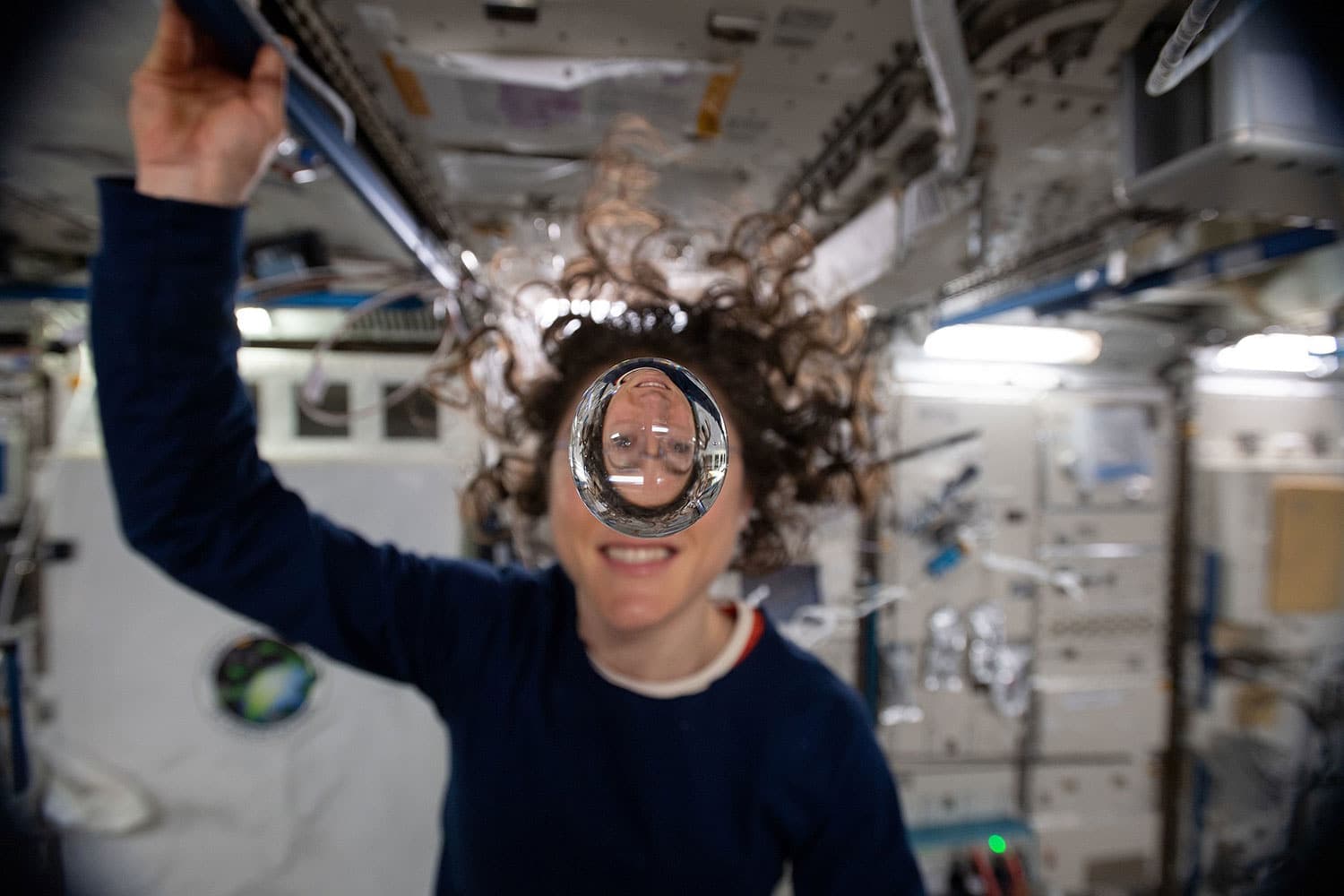
Water is still moved by hand.
Astronauts spend hours hand-carrying water bags and stowing them in cramped lockers. Every kilogram is launched from Earth.
The solution
Supplying water in space.
Affordable, flexible satellites for on-orbit fluid deliveries. Space Ocean moves water from Earth-sourced supply in low Earth orbit, then to depots across cislunar space.
- Free up launch capacity
- Reduce crew workload
- Lower delivered cost
- On-demand access on orbit

Water changes the math.
Water is propellant, life support and shielding. Launching it from Earth still costs $2,000 to $10,000 a kilogram. That is the ceiling on every mission past low Earth orbit.
Run the numbers in our open water calculatorsThe market
Our customers are being built now.
A new generation of commercial space stations is entering low Earth orbit. Each one is a recurring water customer.
Axiom Space
First module planned to attach to the ISS. Up to 4 crew, expandable to 8+.
Vast
Haven-1, then Haven-2. Up to 4 crew, flown on SpaceX Dragon.
Starlab
Voyager Space and Airbus joint venture. Up to 4 crew, expandable to 8.
Orbital Reef
A large multi-module station designed for 10+ crew.
Named stations are potential customers, not current contracts.
The mission
What the 12U proves in orbit.
Zero-g water transfer
Repeatable, pressure-driven transfer of water between tanks in microgravity.
Slosh characterization
Fluid behavior measured against spacecraft attitude telemetry, the core guidance and control data.
Sensors and telemetry
Full instrumentation with autonomous control and fault isolation on board.
Communications
S-band command and telemetry, plus a spectrum-management exercise with no extra flight hardware.
- 12U form factor
- NASA Class D
- 2028 launch
Roadmap
From design to flight heritage.
- 01Phase 1
Engineering and design
- 12U subsystems and payload integration
- Requirements, preliminary and critical design reviews
- 02Phase 2
Build and ground test
- Assembly, integration and test
- Vibration and thermal-vacuum campaign
- Zero-g flight test of the pump and bladder
- 032028
Launch and operations
- Rideshare launch
- In-orbit water-transfer demonstration
- Flight data and heritage

Let's build what's next.
Water where there was none, delivered where and when it needs to be.
Or email info@spaceoceancorp.com